![]() |
| Recipes |
| • Don't Fear the Tofu Burgers |
Standing on the fringes of food, the veggie burger is often misunderstood. It sits in its secret lair at the bottom of the menu or back of the freezer, waiting for the moment when it is needed most. Maybe that's at a barbecue where a panicked young woman cries "I'm a vegetarian!" or at a restaurant where a man contemplates his fate, thinking, "I want something different tonight." These are the times when the veggie burger swings into action. The veggie burger is nothing particularly wild — just normal foods combined together and pressed into a patty. But in that, it somehow becomes something else. Something more.
By name, the first veggie burger appeared in 1982. Created by Gregory Sams, a health-food purveyor and future fractal-artist (yes, really), the VegeBurger was a mix of sesame seeds, soya, vegetables, wheat, and oats sold in packet form. Consumers mixed the VegeBurger powder with egg and water to form patties that were an alternative to what Sams dubbed the "cow-burger." The VegeBurger was not, however, the first animal-alternative burger to show up on the scene. That distinction belongs to Worthington Foods' Choplet Burger, a canned faux-burger product that first reared its soy-based head in 1945. Founded by a Seventh Day Adventist (a sect of Christianity that often renounces meat), Worthington had been cranking out fake meats since 1939. And other Adventists — most notably anti-masturbation proponent and corn-flake family member Dr. John Kellogg — had been making fake meats since the late 1800s.
I have a theory that you can tell how much a restaurant thinks about its food by the quality of its veggie burger. The item has become the quintessential menu add-on for restaurants that want to show that they "care" about vegetarians. Restaurants, let me share a tidbit right now: Warming a pre-packaged Gardenburger, slapping it on a bun, and charging $9 for it is not caring for vegetarians. It's caring for vegetarians' friends who want to go to a restaurant and say, "Oh, look, they serve something for you." Meaning: you eat boring meatless crap, and this place serves one boring meatless item.
The people who think this way about veggie burgers — that they're bland and pre-packaged, that they're only for vegetarians, that they're a threat to the meat establishment — are usually the people who haven't tried a really good veggie burger. More and more restaurants these days will take the time to craft beautiful veggie burgers that are less meat substitutes and more delicious sandwiches in their own right. And maybe that's the problem with the current state of the veggie burger, that the term "veggie burger" is still primarily associated with those rubbery, fridge-section patties when the veggie burger can in fact be so many delicious, amazing, and varied things.
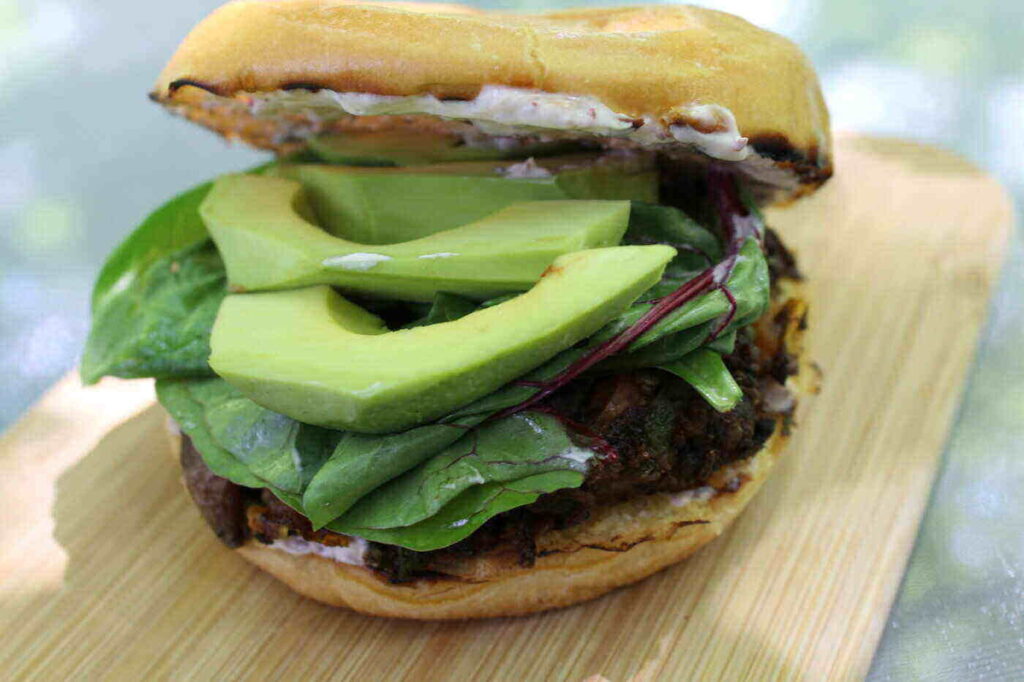
For example, I recently had lunch at a gastropub in a train station whose menu claimed to have the "best" veggie burger. I took that as a challenge, and I stood ready to prove them wrong. I thought they were going to serve me something that was just one step above pre-packaged mediocrity. But the burger I was given was absolutely delicious — a spicy black-bean-and-vegetable combination topped with a bit of guacamole and served on a fresh, crispy bun. The meat eater I was with agreed that it was tasty. And I've seen veggie burgers made of brown rice, kidney beans, oats, walnuts, beets, carrots, soy, mushrooms, seitan, and scores of other foods that can be mixed in countless ways that make them so much more than just meat substitutes.
But still they're labeled with the meat term "burger." This is a problem with not only the veggie burger, but with many vegetarian foods — they're defined by their relation to meat. Vegetarian lasagna is "meatless," the delicious seitan served with Chinese food is "mock chicken," and the tofu patty I love is always, always a "burger." This terminology makes vegetarian food seem unappetizing to meat eaters, which is understandable. If you love sesame chicken, why would you ever try the fake version? That's why the most successful vegetarian dishes served to meat eaters are those that are delicious in their own right — a heaping bowl of Indian Saag Paneer, steaming sweet potato ravioli, or, in this case, a beautiful and perfectly shaped lentil-and-brown-rice patty on a bun. Or, as you might know it, a veggie burger.
Meg Favreau is managing editor of Table Matters.
Photographs by Andrew Rugge, "DIY" photograph by John and Eliza Forder/Getty Images, "Pantry" photograph by Áslaug Snorradóttir.